Viral videos have a simple explanation for the recent run of outages: it all comes back to AI. The real answer is more useful, and it has two parts.
No AI attack has been tied to the outages at Microsoft, the FAA, Chase, United, the NSA or Apple. But AI is behind both pressures that broke them. It's finding software flaws faster than ever, which is driving a flood of rushed patches and upgrades. And it's helping attackers turn each new patch into a working exploit within hours. That's the real yes and no.
The "no": nothing ties an AI attack to the outages
Every organization that went down has described a technical cause. Microsoft traced its outage to a defect in a July fix to its own servers and said the incident had nothing to do with cyber or AI. The FAA's problem started with a router installed during an equipment upgrade. Chase cited a software bug.
According to the Associated Press, Director of National Intelligence Jay Clayton told CNBC the disruptions were not a cyber attack or a coordinated nation-state effort. Investigations are still open, including the FBI's examination of the FAA router. But so far, there's no evidence that an AI system, or anyone using one, broke into these networks.
The first "yes": AI is finding flaws faster than anyone can comfortably fix them
In October, researchers used AI models to find critical flaws in PHP, the language behind a large share of the web. Former CISA Director Chris Krebs said at the time that 3% of all critical vulnerabilities ever discovered had been found in the previous month. Microsoft fixed more than 1,000 vulnerabilities in November alone and credits AI with helping find them.
Every one of those fixes has to be installed, and every installation is a change. Krebs put it plainly on NBC: a lot of these outages come down to patches and upgrades, and any patch risks destabilizing a system. The DNI said that's what happened at the NSA, where applying a patch for the PHP flaws kept systems from coming back up as expected.
The second "yes": attackers are using AI to turn patches into weapons
On Nov 16, Google's Threat Intelligence Group reported the first case it has seen of attackers fully automating the path from patch to exploit. A framework called exploit_agent compares software before and after each security update, works out what the fix closed, writes an exploit and runs it, with no human in the loop. Google found data stolen from victims on the same server. Two months earlier, Google said it hadn't seen fully autonomous attacks in the wild. Now it expects simple versions within one to three months and more sophisticated ones within three to six.
Days earlier, the FBI warned about ARTEX, an AI-driven attack framework that took some intrusions from first contact to privileged access in under three hours. And Google's Project Zero cut its vulnerability disclosure deadlines, saying AI has increased how quickly attackers can find and exploit flaws.
Why the two pressures feed each other
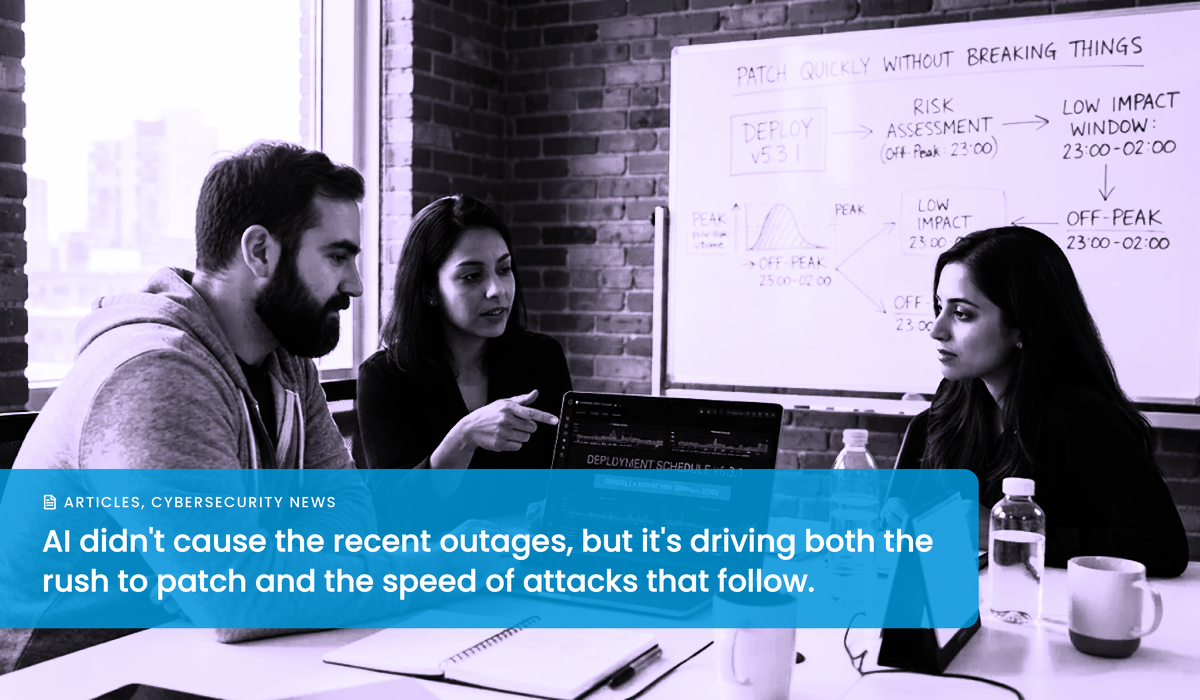
Put those together and IT teams are caught in a squeeze. Attackers can now weaponize a patch within hours, so organizations have to install it fast. Installing fast means less testing, and less testing means more chances to break something important. Patch slowly and you're a target. Patch carelessly and you could be the next outage headline.
That's why Krebs expects disruptions in some services over the next several months, and why this run of outages won't be the last of its kind.
What AI attacks still can't do
There's good news in Google's report, too. Today's autonomous attack tools trade stealth for speed. They generate noisy traffic and leave traces that defenders can detect. And they mostly go after flaws that already have a fix, which means the organizations at greatest risk are the ones that haven't applied it yet.
What to do now
For business leaders:
Make fast, careful patching a business priority. Expect more maintenance windows, and plan how you'll tell customers if a change causes a disruption.
Know what an attacker would reach first. Websites, remote access tools and other internet-facing systems are the most likely targets for automated attacks.
Ask your providers two questions. How quickly do you install critical fixes, and how do you test them before they reach us?
For IT and security teams:
Patch internet-facing systems first, and track how long it takes from a fix's release to its installation.
Roll out changes in stages, and know exactly how you'd undo each one before you start.
Watch for attacks on newly patched flaws in the days after a fix lands. Automated attacks are fast, but they're noisy.
Use AI to help sort and prioritize, with people making the calls on what to fix and how to respond.
For everyone: turn on automatic updates for your phone, browser and home Wi-Fi router, and stop reusing passwords.
AI is speeding up both sides of security at once: the breaking and the fixing. The organizations that come through this period well will be the ones that can patch quickly without breaking things, and spot the attacks aimed at whatever they haven't fixed yet.